Swath memo · Event 00X
Triage the swath before the first adjuster rolls.
Hail & Wind Damage flags bruising, missing shingles and displaced ridge caps on every roof it can see in the storm swath, by address, so the claims queue is sorted by what the imagery shows instead of who called first.
- To:
- Catastrophe response lead, P&C insurer
- From:
- Hail & Wind Damage
- Re:
- Sorting the claims queue after a hail or wind event
- Event:
- Numbered per storm, delivered after the clear-sky pass
How the queue gets worked now
The storm moves through on a Tuesday night. By Wednesday morning FNOL claims are coming in by phone, through the app and from agents, and the CAT desk is assigning them. The default order is arrival: whoever reported first gets the first adjuster. Surge firms are being called, and you have to decide how many adjusters to bring in without knowing how many roofs in the swath are hurt.
Each field adjuster drives to an address, gets up on the roof or sends a drone, and scopes it. Some of those roofs have a few loose shingles. Some have a slope of hail marks and a ridge cap that has lifted. The queue doesn't know which is which until somebody is standing there. A policyholder with a torn roof who hasn't called yet sits behind one with a clean roof who called at 6 a.m. Weather-vendor storm tracks narrow the footprint to a polygon, but a polygon tells you where the storm went, not which roofs took it.
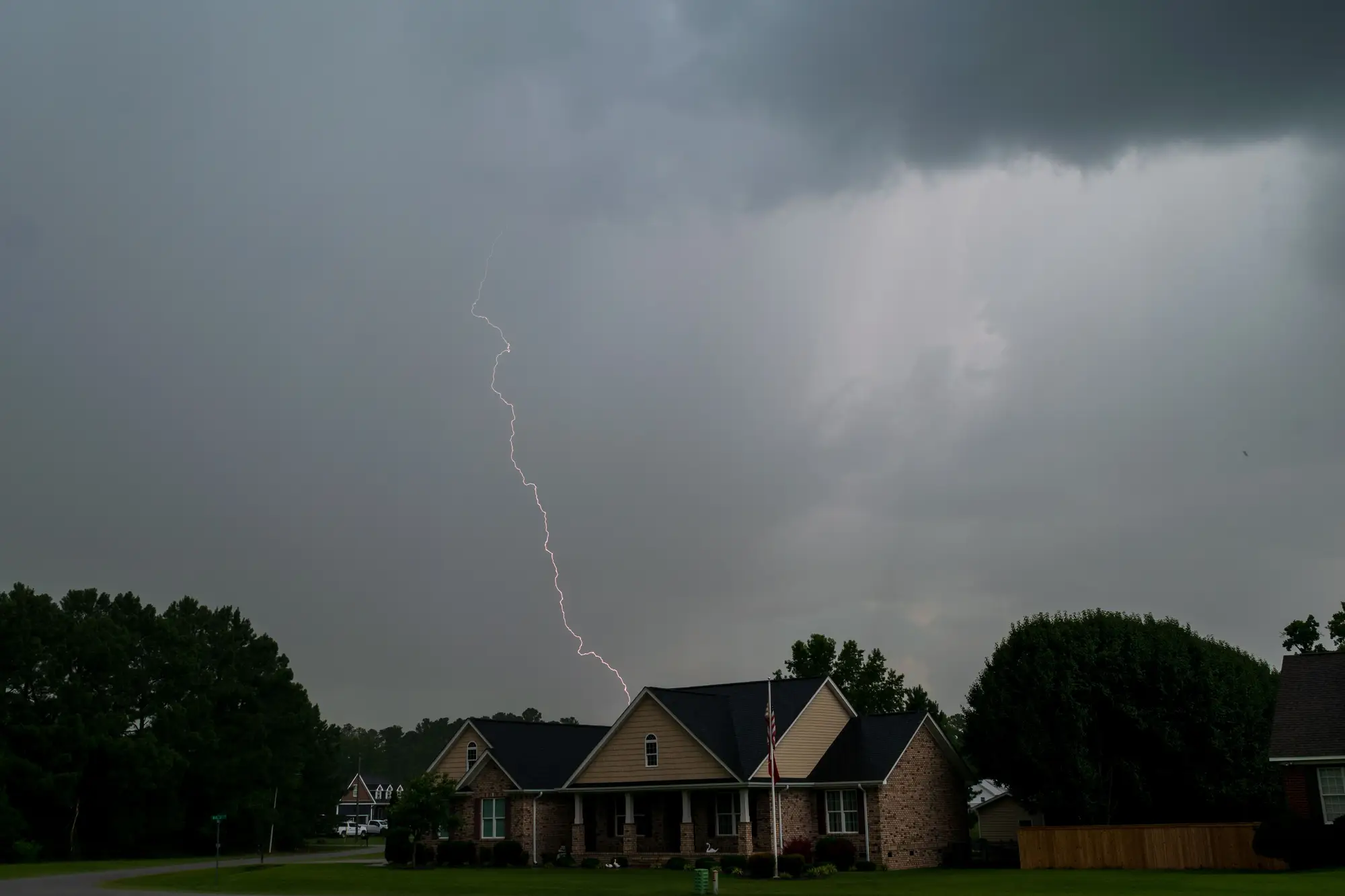
The surge decision gets made on the polygon and a gut feel for how bad the last one was. What this changes is the order and the headcount conversation: a memo that says which addresses show damage, before the first adjuster is in the car.
What comes back in the memo
One delivery per event, for the swath you define. Each item below is in the memo.N6
2.1Per-address flag set[CSV or GIS layer]
One row per address in the swath. Each row carries the flags the imagery shows: hail bruising visible, shingles missing, ridge cap displaced. Joins to your policy list on address.N2
2.2Marked-up image per flagged address[Image]
An image of the roof with the flagged areas marked, so the desk adjuster can see what the flag is pointing at before assigning.N1
2.3Sortable dispatch list[Sortable list]
The flagged addresses in a list you can sort by flag mix, so the roofs showing several flags together rise to the top of the assignment order.
2.4The numbered memo[Memo]
The above, bound into one numbered document per event, so the starting point for the claims queue is written down and dated.
How it works
3.1Define the swath
You send the swath boundary and the event date. If you have an in-force policy list for the area, send that too and the memo is keyed to it.
3.2Task the pass
We task a post-event aerial pass over the swath. It needs a clear-sky window after the storm, and the same weather system that hit your insureds can delay it.N3
3.3Flag the roofs
Roofs across the swath are read for bruising, missing shingles and displaced ridge caps. Roofs the imagery can't see clearly are listed separately.N4
3.4Memo delivered
The flag set, the marked-up images and the sortable list arrive as one numbered memo. We aim for the morning after the pass, and tell you the date once the pass is confirmed.
Where it fits in your workflow
In the first days of a response
Use it to order the assignments. The addresses showing several flags go to the first adjusters; the addresses with no flags go later in the queue, not off it. It also gives the surge conversation something to stand on: how many flagged roofs there are. The adjuster still inspects, scopes and confirms every claim.N5
Limits
- N1
A flag is a pointer
A flag is a triage indicator. It is not a confirmed claim, a damage estimate or a repair-cost figure, and it does not say a roof needs replacing.
- N2
Resolution floor
At 0.1 m a pixel is about four inches across. Missing shingles and a lifted ridge cap show up. An individual hail hit is smaller than a pixel and is not traced; bruising is read as a pattern across a slope, so light hail can be missed.
- N3
Clear sky after the storm
The pass needs a clear window after the event. The system that dropped the hail can sit over the swath for a day or more, and that pushes the pass and the memo back.
- N4
Roofs it can't see
Heavy shadow, tree cover, tarps already on the roof and very dark roofs reduce what the imagery shows. Those addresses are listed as low-confidence, never guessed.
- N5
Damage you can't see from above
Interior water damage, hail damage to siding or windows, and anything under a roof deck are out of reach from above.
- N6
Event by event
Each memo covers one event. It is not a monitoring feed, and it does not watch your book between storms.
Who it's for
For
- Catastrophe response leads and CAT desk managers at P&C insurers who set the assignment order after a hail or wind event.
- Claims leaders deciding surge staffing for a swath.
Not for
- Anyone looking for a damage estimate, a repair cost or a settlement figure.
- Teams hoping to close claims without an adjuster visit.
- Flood, fire or earthquake losses; this is hail and wind on roofs.
Questions before a project
Does a flag mean a confirmed claim?
No. It is a triage indicator. The adjuster confirms what is on the roof and scopes the loss.
Can this replace an adjuster visit?
No. It sorts the queue so the roofs most likely to be damaged get a visit first. Every claim is still inspected and scoped the way it is today.
How soon after the storm can you fly?
It depends on the next clear-sky window over the swath. Tell us the event date and swath and we will tell you when the pass can be tasked.
Does the same storm system delay the pass?
Yes. Optical imagery needs a clear sky, and a slow-moving system can hold the pass back.
How do we check it against our own claims?
Take an earlier event where your adjusters have already scoped the roofs and run the memo on that swath. Compare the flags with what your adjusters found, address by address, and decide whether the order it gives is good enough to assign from.
Will it load into our claims system?
The flags come as a CSV or GIS layer keyed to address, so anything that reads a spreadsheet or a map layer can take them. We don't write into your claims system.
Who owns the imagery and the results?
Ownership and licence terms for the imagery and the memo are set in the project agreement before anything is ordered. Ask for them early if legal needs to review.
How is a project priced?
It depends on swath size and imagery source, and is scoped for the event or events you have in mind. No price is quoted on this page.
Does it cover wind damage to things other than roofs?
No. Roof damage only: bruising, missing shingles, displaced ridge caps.
End of memo
Define the swath, get the memo.
Tell us the event and roughly how many addresses sit in the swath. We will tell you when a pass can be tasked and what the memo will cover.
Start a project